
How Your Avocados Are Powering Land Restoration in Africa
Avocados have become a staple in European kitchens. Europe is now the world’s second‑largest importer – a $3.3bn market accounting for 43% of global demand – with consumption still projected to grow at 7% a year to 2032, driven by rising health‑consciousness and emerging demand in Italy, Germany and Eastern Europe.
Yet for a fruit that has risen so quickly in popularity, the restoration story behind it remains largely invisible. Few consumers realise that, when grown in sustainable, agroforestry‑led systems, the avocados on their plate are helping drive better land management, strengthen climate resilience and restore nature thousands of miles away.
This article opens up that story. We follow the avocado from Kenya to Europe, drawing on Regeneration’s work [1] in the avocado value chain and the experience of Biofarms, a Kenyan agri‑SME supporting smallholders to grow avocado sustainably and export to European markets.
Avocado Farming: Kenya’s Smallholder-Led Agroforestry Model
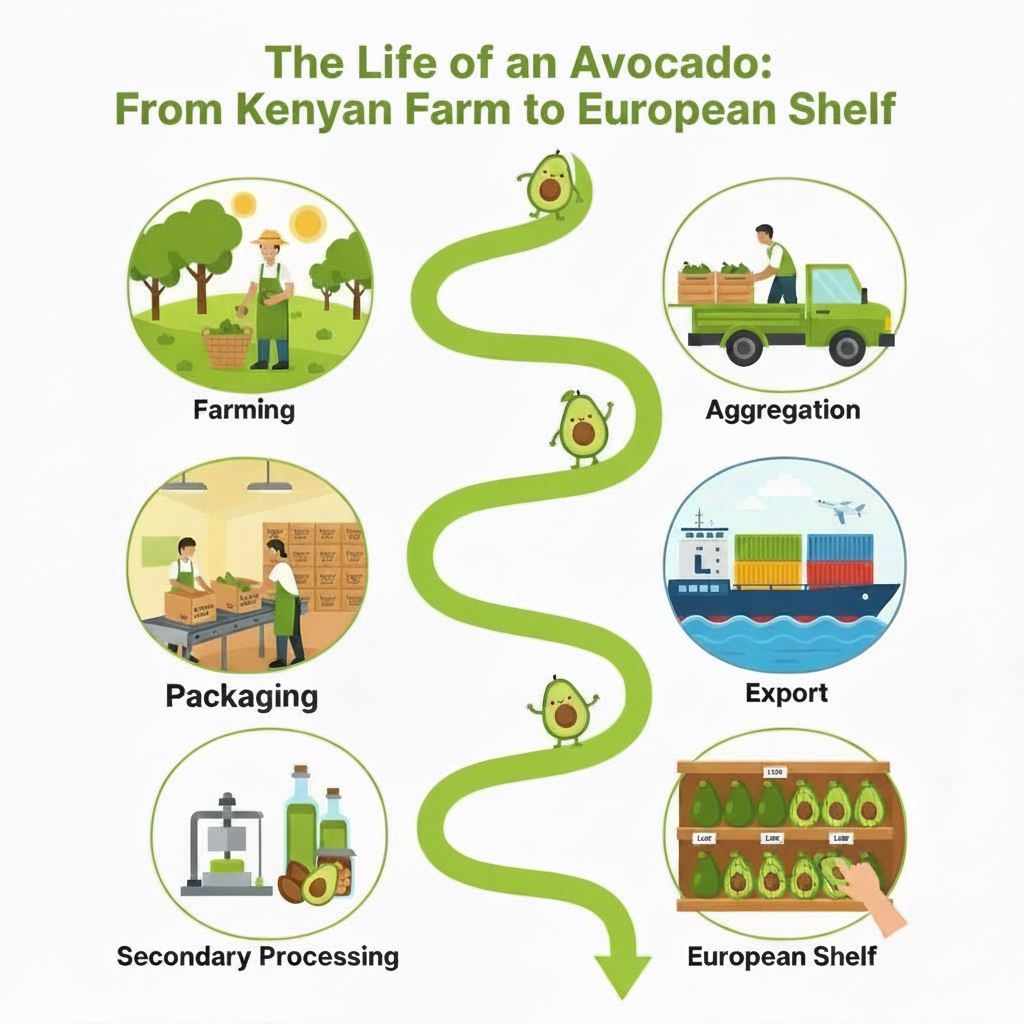
The avocado’s journey begins long before harvest. Agronomic choices made months in advance shape fruit quality, and in Kenya this foundation rests on a farming model that is smallholder‑led, agroforestry-based, organic and climate‑resilient.
Around 70% of Kenya’s avocados are grown by smallholders on 1–2 hectare farms. Drawing on inherited practices and economic logic, farmers cultivate avocados in agroforestry systems, intercropping fruit trees with staples crops. For example, in Machakos County, 82% of sampled farmers adopted agroforestry, spreading income risk, strengthening food security, improving ecological health and restoring degraded landscapes. Despite their size, these farms are highly productive. Globally, smallholders cultivate just 9–12% of agricultural land yet produce around one-third of the world’s food.
In addition to being smallholder- and agroforestry-led, Kenya’s avocado sector is rooted in organic, low‑input farming. Over 50% of Kenya’s avocados are already grown without synthetic fertilisers or pesticides, which protects soils, boosts biodiversity and supports long‑term resilience. Favourable growing conditions, including multiple rainy seasons and mild temperatures, keep irrigation needs low and give Kenyan avocados a naturally low water footprint. Finally, as a perennial, climate‑positive crop, avocado trees remain productive for more than 40 years, storing carbon year after year – roughly the equivalent of driving 50 to 60 kilometres in a petrol car [2].
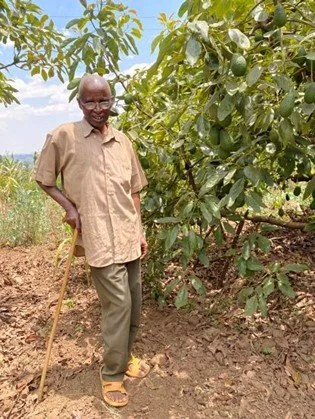
Meeting the Farmers Behind the Avocado: Joseph
Size of land: 0.75 acres
Commodities: Avocado (Hass 98%, Jumbo 2%), Passion Fruit, Maize, Grevillea/Silky Oak Trees
Production Capacity:0.9MT (2024)
Joseph’s farm shows what this looks like in practice. He intercrops his avocado trees with maize and beans in a diversified agroforestry system, generating extra income while supporting household food security. Along the farm boundaries, he has planted Cypress trees that stabilize the soil, reduce erosion, and maintain long‑term fertility. Instead of synthetic fertilizers, he enriches his soils with cow manure, reinforcing the organic, low‑input practices that define Kenya’s smallholder avocado production.
The Role of Agri-SMEs: Levelling the Playing Field for Kenya’s Avocado Smallholders
Whilst smallholders underpin Kenya’s avocado sector and its landscape restoration efforts, they capture only a fraction of the value they create. Regeneration’s calculations show farmers earn just 9–12% of the final export price – around 13–18 pence from a £1.50 avocado in the UK – and that’s only when fruit reaches export markets. With around 40% of avocado and mango production lost to shelf‑life and handling issues, many farmers are pushed into local markets where earnings can fall by almost 40%.
This is where agri‑SMEs like Biofarms are critical. By acting as aggregators, processors and exporters, they shorten the value chain, cut out unnecessary intermediaries and channel more value back to farmers. Crucially, unlike traditional agribusinesses, these SMEs operate through genuinely regenerative systems. In fact, by embedding regenerative practices like agroforestry and organic farming directly into their operations, their commercial success depends on healthier soils, more tree cover and richer biodiversity – which is why they are able to drive meaningful restoration.
This restoration-focused approach translates directly into on‑the‑ground support. Biofarms strengthens the chain from the start, providing agronomic support through village agents who distribute certified seedlings, offer training and help farmers adopt sustainable practices. Annual contracts give farmers guaranteed buyers and predictable demand, reducing income volatility. To date, Biofarms has partnered with more than 5,000 farmers to manage agroforestry farms, providing rural employment whilst restoring over 2,000 hectares of degraded land.

Meeting the Farmers Behind the Avocado: Stephen
Size of land: 10 acres
Commodities: Avocado (Hass 98%, Fuerte 2%), Bananas
Production Capacity: 5 MT (2023), 10 MT (2024)
Stephen’s farm demonstrates how Biofarms’ support translates directly into restoration on the ground. With guidance from Biofarms, he doubled his production in just two seasons, increasing both household income and the area under sustainable management. Regular agronomic visits from experts like Kileges ensure he can maintain healthy soils, manage pests and meet export standards. “Working with Biofarms has been very fruitful and supportive,” he says, “especially with their agronomists being a phone call away.” Crucially, guaranteed off‑take contracts priced above the local market give him predictable earnings and allow him to employ around ten workers. This stability strengthens the economic case for regenerative farming – making restoration not just environmentally beneficial, but financially rewarding.
Aggregation and Initial Processing: From Tree to Crate
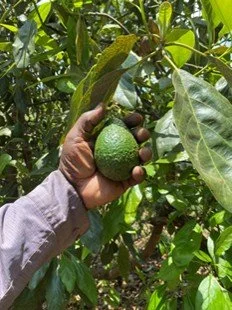
Building on restoration gains at the farm level, the next stage begins once avocados are ready for harvest. Harvesting happens only at optimal maturity, during Kenya’s main season from March to September. Fruit is picked and handled gently, with farmers using manual harvesting and padded bags to avoid bruising. These practices ensure that only mature, undamaged avocados enter the value chain.
From there, agri‑SMEs like Biofarms step in to aggregate fruit from multiple smallholders, streamlining pick‑up and transport and helping overcome poor infrastructure, post‑harvest losses and fragmented supply chains. At collection points, the fruit receives light pre‑processing (a quick wash and basic size and quality checks) before moving on to packhouses.
Formal Processing: How Avocados Get Market‑Ready
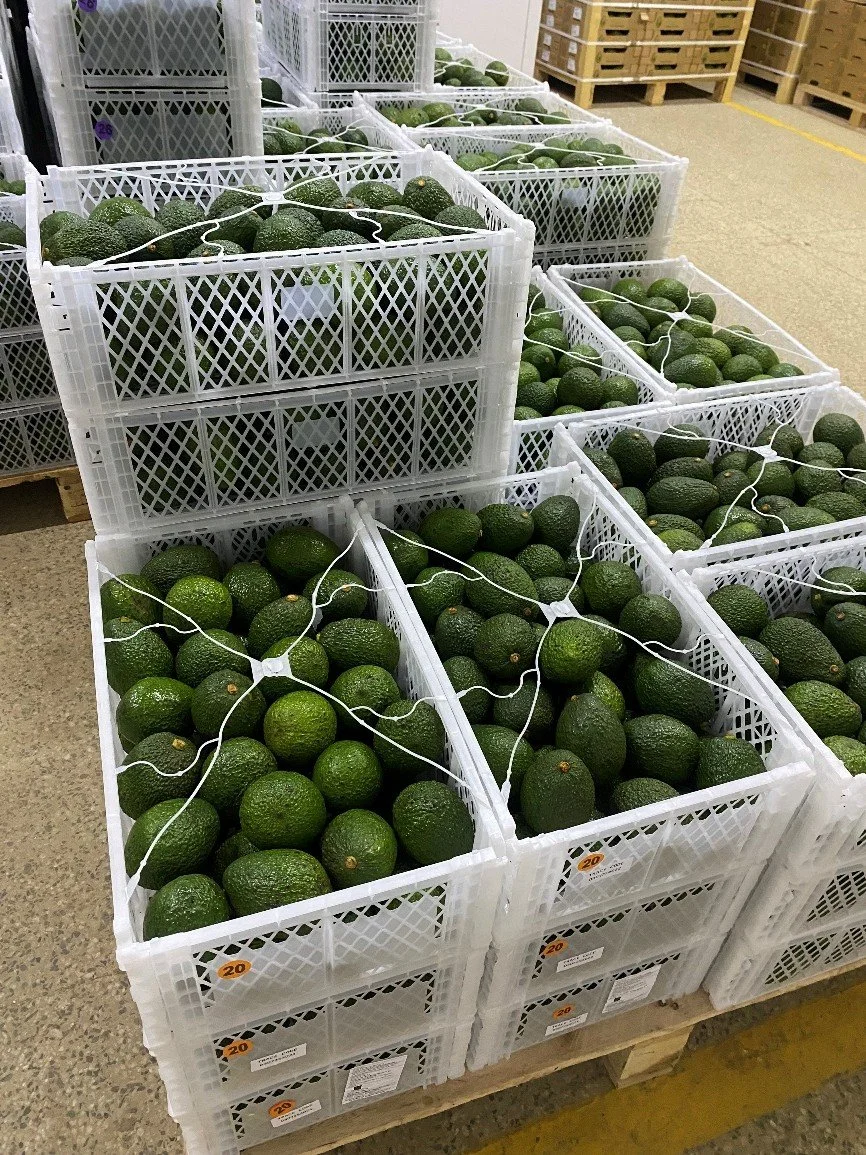
At packhouses, avocados move through a series of steps designed to protect quality and prepare the fruit for export or value‑added processing. This stage is where consistency, traceability and market readiness are locked in, helping to secure sales and build markets that reward land‑restoring production models.
First, fruit is carefully sorted. Teams check maturity, size and external quality before grading and packing into cartons or crates. Avocados then undergo light cleaning and treatment, from washing to natural or wax‑free coatings that help maintain freshness and extend shelf life. Each batch is labelled with full traceability codes, and seasonal export rules ensure only high‑quality fruit enters international markets. Finally, temperature‑controlled storage with strict humidity and cooling management reduces waste and preserves quality throughout the cold chain.
Lower‑grade class II avocados follow a different path, moving into value‑added processing such as oil production. In recent years, Biofarms has started to expand into this space, using non‑export varieties and packhouse rejects to produce crude avocado oil and other products – cutting waste, supporting a circular model and strengthening the financial incentives for sustainable agricultural models.
Export Trading: Launching Kenyan Avocados into Global Markets
Trading marks the shift from packhouse to export, where certification, cold‑chain systems, logistics and market access determine how Kenyan avocados compete globally. While Biofarms already had a strong reputation when it joined Regeneration’s MRTA portfolio [3], MRTA played a pivotal role in strengthening its competitiveness at the export stage. By combining commercial strategy, value‑chain insights and on‑the‑ground presence, MRTA helped convert buyer interest into trusted, long‑term relationships.
One example is Eurofresh, a major organic avocado buyer. Through an off‑taker segmentation exercise, MRTA identified Eurofresh as a strategic target ahead of the Fruit Attraction trade fair in Madrid. MRTA’s value‑chain expertise enabled it to speak the buyer’s language, addressing concerns around quality, monitoring, traceability and logistics. And because MRTA had already built a strong, firsthand understanding of Biofarms’ operations and impact, it could credibly vouch for Biofarms, accelerating trust‑building and helping secure the partnership.
To sharpen Biofarms’ market positioning, MRTA leveraged the company’s competitive strengths. On the one hand, Biofarms’ certifications – including EU Organic, Rainforest Alliance, Global G.A.P and GRASP – signal strong environmental and social performance, enabling access to premium markets. On the other hand, its advanced cold‑chain management – storing avocados at 4–7°C with high humidity and controlled‑atmosphere conditions – reinforce their edge, demonstrating Biofarms’ commitment to high-quality and premium produce.
Once buyer agreements are in place and export timelines set, transport and logistics take over. Biofarms manages export risks, such as disruptions in the Red Sea, by using air freight where possible and relying on cold‑chain sea freight for longer or rerouted journeys – this ensures that fruit quality is maintained despite wider supply‑chain pressures. While this stage is largely handled by the agri‑SME, MRTA supported the process by resolving delays and serving as a key contact point, ensuring smooth, continuous coordination between both sides.
Secondary Processing, Importing and Distribution: The Avocado’s Final Mile
Once avocados reach importing countries, a new network of processors, ripening centres and distributors takes over to prepare the fruit for retail shelves. After customs clearance, they move through warehousing and domestic logistics before entering ripening centres, where temperature, humidity, firmness and colour are carefully controlled.
Alongside fresh‑fruit handling, some avocados enter secondary processing, becoming products such as avocado oil, guacamole or cosmetic‑grade ingredients. Increasingly, companies use tools like blockchain and data analytics to strengthen traceability and streamline distribution across this final stretch of the chain.
And this is where the journey ends. On a European supermarket shelf, ready to be picked up in your shopping basket – or transformed into the cosmetic products you use at home.
Meeting the Farmers Behind the Avocado: Joseph and Stephen
By working with an exporter like Biofarms, farmers such as Stephen and Joseph earn higher premiums for their fruit – a direct result of organic certification and reliable access to export markets. These premiums allow them to capture more value per avocado instead of losing margin to layers of middlemen, creating a tangible financial reward for maintaining regenerative, land‑restoring production systems.
Yet even with this progress, Stephen still faces structural pressures such as drought and tight cashflow, spending around 25 KES per tree just to maintain his orchard. Higher export premiums in future seasons would allow him to reinvest in his organic farm and strengthen its resilience – for example, by planting more trees, which is one of the most effective ways to protect his farm against recurring drought.
The Full Journey: What It Takes to Bring an Avocado to Your Plate
The avocado may look simple on the shelf, but behind every fruit is a value chain powered by multiple actors – especially the smallholders who underpin it. And while the chain is shorter than crops like cocoa or coffee, it is still complex. Sustaining strong yields and restoring land demands sustainable farming, precise harvesting, careful handling and close coordination across the value chain – so regenerative production retains its value all the way to market.
Within this system, agri‑SMEs are pivotal. Without impact‑focused companies like Biofarms, smallholders would capture even less value – and have far fewer incentives to adopt sustainable, restorative farming models that earn premiums and secure market access.
Ultimately, consumers and buyers hold the final lever. When we choose supply chains that reward farmers, we push value back upstream. Supporting certified, nature‑positive producers, such as Kenya’s organic, climate‑resilient avocado growers, turns everyday purchases into on‑the‑ground restoration: better soils, more trees and healthier, more resilient landscapes.
This article is the fourth in a series, funded by Bezos Earth Fund. In the coming instalments, we’ll unpack further lessons from Regeneration’s programmes and the solutions needed to unlock regenerative growth at scale.
[1] Regeneration is a platform – set up by Palladium and Systemiq – to accelerate natural solutions to climate change and biodiversity loss by connecting market demand with regeneratively produced commodities.
[2] A mature avocado tree can absorb carbon dioxide at a rate of almost 22 kg per year, according to research from the University of Florida.
[3] MRTA is a programme delivered by Palladium and Systemiq (Regeneration) to scale restoration-focused agribusinesses in East and West Africa.