
From Thin Margins to Premium Prices: How Processing and Certification Drive Restoration Impact
How do agri-SMEs contribute towards restoration? Agri‑SMEs restore land by embedding regenerative practices directly into their operations, making commercial success dependent on healthier soils, forests and communities. In doing so, they create markets and real incentives for practices like agroforestry and organic farming, while connecting farmers to premium and impact‑based revenue streams.
What sets them apart? Unlike extractive businesses that deplete natural resources for short-term gain, restorative businesses build natural capital over time, generating income while improving soil health, biodiversity, and livelihoods.
Agri‑SMEs in Africa can be powerful engines of land restoration – but only if they can escape the thin‑margin trap. Currently, more than 70% of the continent’s exports leave as raw, low‑value goods, which contributes to agri-SMEs capturing only a small share of the final retail price – sometimes as low as 5% [1]. These margins keep businesses small, vulnerable and unable to reinvest in farmer incomes, sustainable farming practices and climate resilience. Enabling a shift into higher‑value, higher‑margin models is therefore essential – it strengthens competitiveness while unlocking the capital required to scale nature‑positive supply chains and restore land.
The Power of Processing: Turning Crops into High‑Value Products
One of the most effective ways for agri‑SMEs to move into higher‑margin models is through processing – transforming raw commodities into value‑added products through roasting, pressing, extraction, packaging or branding. This does far more than increase the commercial value of a crop. It is a pathway to strengthening agri‑SME resilience, unlocking higher margins and creating the financial headroom for investment in land restoration.
Processing delivers two major advantages for agri‑SMEs. First, it extends shelf life, stabilises supply and reduces post‑harvest loss, meaning a greater share of crops can be sold rather than wasted. Converting fruit into juice, for example, enables sales well beyond the harvest season and significantly reduces spoilage. This creates more predictable cash flows – a critical condition for long‑term investment in regenerative farming practices. At the same time, processing unlocks access to higher-value markets by enabling agri-SMEs to differentiate their products and capture greater margins. Even relatively basic processing can increase export value by up to 300%, depending on the product.
An Example from Regeneration: Cracking More Value from Macadamias
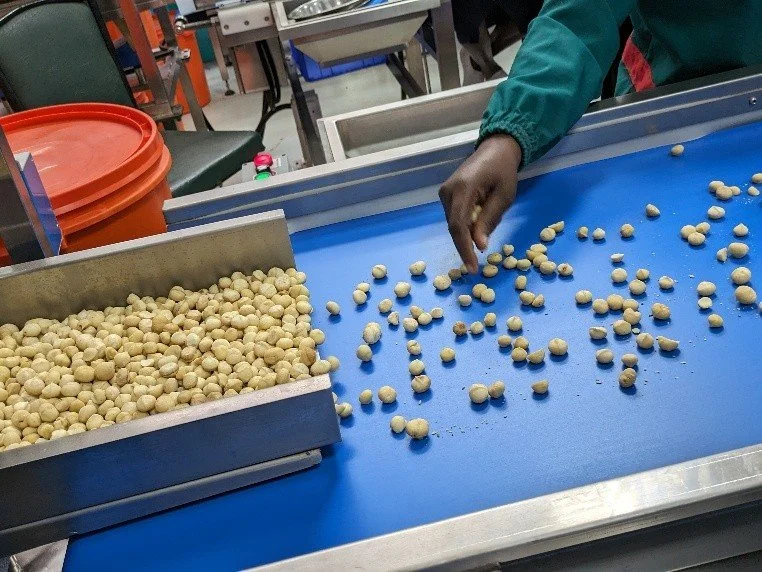
Image 1: An employee sorting and grading macadamia at one of Tropical Mac's processing facilities.
Regeneration’s landscape study [2] identifies strong opportunities for processing in restoration-aligned commodities. For example, in Kenya, processed macadamia can earn significantly higher margins than raw macadamia, boosting business revenue. As per Regeneration’s calculations, macadamia oil generates price premiums of 20–30%, while roasted macadamia is even more attractive – commanding around 40% premiums and requiring only one‑third of the input volume needed for oil production.
Beyond stronger margins, expanding domestic processing can deliver broader economic benefits by creating jobs, increasing wages, and retaining more value locally. Scaling processing capacity in Kenya could inject over $80 million USD into the economy, create an estimated 30,000 jobs, and support more than 200,000 farming households. This opportunity is underpinned by strong market demand. While the global macadamia oil market is valued at approximately $280 million USD and growing at 5.4% CAGR through 2030 [3], the roasted macadamia market is even larger at $740 million USD, nearly three times the size of oil. As the world’s third-largest macadamia exporter, with a tenfold increase in processors since 2009, Kenya is well positioned to capture this growth.
Alongside boosting value capture and resilience for agri‑SMEs, developing processed commodity lines also deepens the financial incentives that drive restoration. Kenya has an estimated 200,000–300,000 hectares suitable for macadamia cultivation [4], much of which can be integrated into sustainable smallholder agroforestry systems. Expanding demand for value-added products such as oil and roasted macadamia can help to accelerate the adoption of restoration-aligned farming models, strengthen rural livelihoods, and support Kenya’s target of restoring 281,000 hectares by 2030.
Certification as a Pathway to Premium: Unlocking New Markets and Strengthening Margins
Another way agri-SMEs can transition to higher-margin models is through sustainability certification, such as Fairtrade, Rainforest Alliance, and organic standards. These certifications provide credible verification of ethical and sustainable production – attributes that consumers value but cannot independently assess – allowing producers to capture premiums linked to social, environmental, and health benefits.
Evidence shows certified farmers earn 20–30% higher prices than non-certified peers, alongside 16–22% higher household incomes. In coffee markets, for example, premiums include approximately $0.20/lb for Fairtrade and $0.20–0.40/lb for both USDA and EU Organic certifications, with Rainforest Alliance and similar schemes negotiated case by case.
Beyond price premiums however, certification is increasingly a gateway to regulated international markets. In Europe, schemes such as Fairtrade and Rainforest Alliance can support compliance with emerging regulations like the EU Deforestation Regulation (EUDR) for forest-risk commodities including cocoa and coffee. There is also growing demand for certified products across Europe, North America, and the Middle East, reinforcing their role in market access and resilience.
An Example from Regeneration: Avocados and the Organic Opportunity
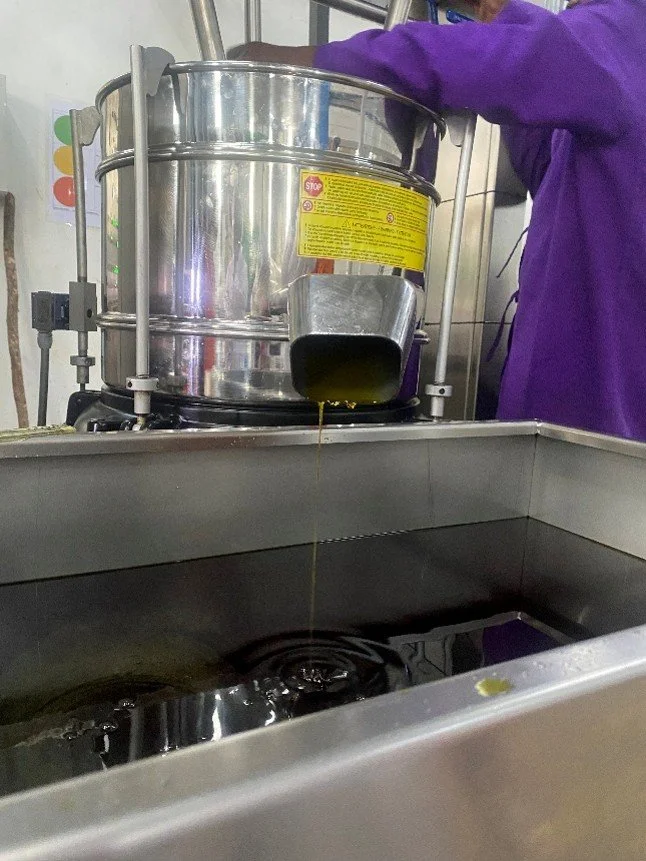
Image 2: Machinery at Biofarms' processing facility where they produce avocado oil.
Regeneration’s market intelligence shows that sustainability certification can deliver tangible commercial gains. In Kenya, for example, organic certification has been associated with export price increases of up to 45% for avocados. Simultaneously, the global organic avocado market is projected to expand at a 5–7.5% CAGR through 2030, while demand for organic avocado-based cosmetics is surging at an estimated 73% CAGR. Kenya is well positioned to capture this market. Around 50% of its avocado exports are already organic, compared to just 1% in Peru.
Beyond commercial gains, sustainable certifications such as organic also deliver clear climate and nature benefits. Higher premiums from certification incentivise sustainable farming practices that improve soil health, enhance water retention, and support natural regeneration. In turn, this means that sustainability certifications help to restore degraded agricultural land and build long-term ecological resilience.
Case Study: Biofarms’ Move Up the Value Chain
Biofarms, a Kenyan fruit processor and exporter, offers a clear example of how value-addition can deliver both commercial gains and restoration outcomes. By participating in Regeneration’s Markets Readiness Technical Assistance Facility (MRTA) [5], this company strengthened its processing lines, shifting from lower‑value fresh exports to avocado oil for premium markets.
A key milestone in this transition was securing a 5-container deal with Tradin Organic for avocado oil, achieved by converting lower-grade fruit into a higher-value product. This move not only opened access to a fast-growing market segment but also significantly improved revenue potential. Biofarms is now on track to obtain organic certification for its processing facility, which is expected to increase margins by 35–40%.
Critically, these gains are translating into real on-the-ground impact. The Tradin Organic partnership is set to benefit over 4,000 smallholder farmers and support the restoration of approximately 808 hectares of degraded land. Higher margins are enabling Biofarms to strengthen farmer incentives, invest in nurseries and tree planting, and expand restoration practices – demonstrating how commercial upgrading can directly drive landscape restoration at scale.
Challenges with Achieving High-Margin Models
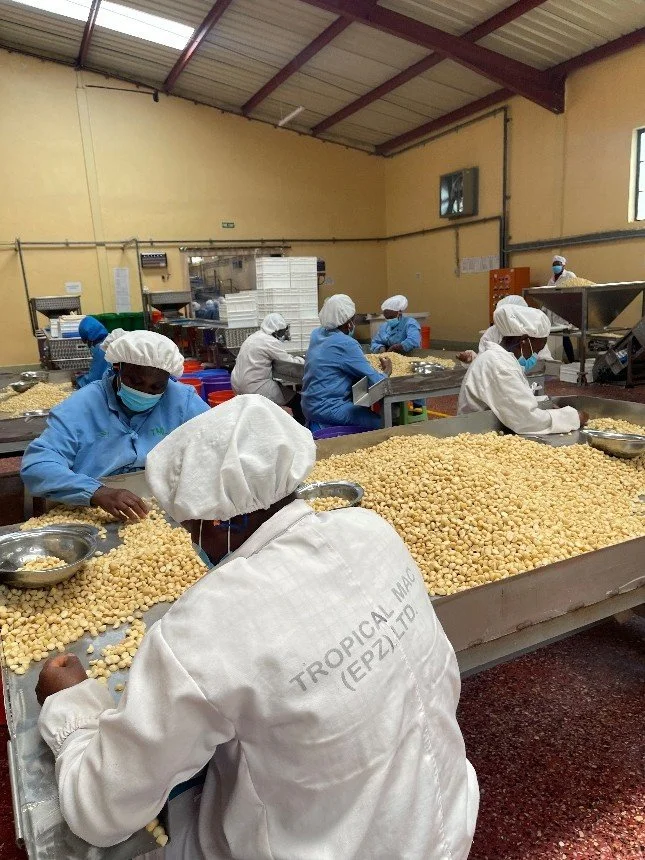
Image 3: Employees sorting and grading macadamia at one of Tropical Mac's processing facilities.
Despite their potential however, high‑margin models remain difficult for agri‑SMEs to achieve due to structural, financial and market constraints that limit adoption and scale. As a result, many SMEs remain locked into low‑margin production systems with limited capacity to invest in restoration or move up the value chain. These barriers are real but solvable – and they point directly to where targeted interventions can unlock progress.
One major constraint is access to finance. Processing and certification require long‑term capital that many SMEs struggle to secure. Infrastructure is particularly capital‑intensive, with estimated costs of around $1 million USD for macadamia processing and $1.5 million USD for mango [6]. Blended finance, concessional capital and risk‑sharing facilities can play a catalytic role here, helping agri-SMEs invest in value-added models.
Market dynamics also create uncertainty. Demand for premium and certified products, while growing, remains inconsistent. Spot‑market trading still dominates over long‑term offtake agreements, creating cash‑flow volatility, and certified products often compete directly with conventional alternatives, which can be more competitive during economic downturns. This imbalance is reflected in global market. In 2021, more than half of coffee was VSS‑certified [7], yet in 2021 only a quarter was sold as compliant. Strengthening buyer–supplier relationships and developing stable markets are thus essential to increasing the share of certified coffee that is actually sold as certified — and ensuring farmers receive the premiums they deserve.
Environmental, political and legal factors further complicate high‑margin models. For example, rising temperatures due to climate change can delay oil accumulation in macadamia until nuts harden, reducing yields and constraining processing capacity. For products like macadamia oil, which rely on large and consistent volumes, this creates supply volatility. Weak enabling conditions also matter – certification schemes and policy environments do not always align with local realities. In some cases, high costs and limited returns have driven pushback – such as Kenya’s 2025 suspension of Rainforest Alliance tea certification – highlighting the need for locally adapted standards and technical assistance that helps SMEs meet requirements efficiently.
Even when high‑margin models succeed however, value distribution across supply chains often remains uneven, with a large share of retail value not reaching producers. For example, Gingrich and King (2012) find that a $2–10 USD Fairtrade premium at consumer level translates into only around $1 USD for farmers in cooperatives. Strengthening value distribution, boosting producer bargaining power and ensuring transparent premium payments are thus critical to supporting fair value capture.
Supporting Agri-SMEs to Achieve High-Margin Models: Key Takeaways
Taken together, these challenges show that delivering effective and equitable high-margin models depends on coordinated action across stakeholders – from financing the CAPEX and OPEX needed for value addition to providing targeted technical assistance that supports implementation:
Finance for value addition: With support from donors and impact investors, landscape-level blended finance facilities can de-risk investment and provide the CAPEX and OPEX needed for processing equipment, certification, and market entry.
Targeted technical assistance: Agri-SMEs need support to build strong value addition business cases, meet certification requirements, and secure commercial deals. This can be delivered by a range of actors, including market intermediaries, donors, off-takers, and investors.
Climate resilience: Restorative practices such as agroforestry and organic farming help protect yields from climate shocks while rebuilding soils and strengthening long-term landscape resilience. Donors and market partners can support adoption through funding seedlings, training, and on-farm upgrades that make these practices more accessible to farmers.
Strengthening high-integrity markets: Ensuring that premiums from value added products reach farmers and restoration outcomes builds trust and demand. Off-takers and other market actors can support this by strengthening supply-chain monitoring and investing in transparent reporting systems.
Collectively, these actions enable agri‑SMEs to break out of the thin‑margin trap and build scalable, commercially viable and inclusive business models. Only then can they unlock the capital and incentives needed to drive restoration at meaningful scale.
This article is the third in a series, funded by Bezos Earth Fund. In the coming instalments, we’ll unpack further lessons from Regeneration’s programmes and the solutions needed to unlock regenerative growth at scale.
[1] Regeneration calculation using internal data.
[2] This scoping study funded by the World Resource Institute (WRI) aimed to provide insights and strategic advice on potential interventions/models to scale up restoration activities in AFR100's three priority landscapes.
[3] This is high in comparison to other raw commodities like coffee (5%), cocoa (5%), and bananas (1%).
[4] Whilst there isn’t available analysis on land suitable for macadamia production, the land suitable largely overlaps with agroeconomic zones potentially suitable for coffee production. The total area in Kenya suitable for coffee production is ~240k hectares. (Biovision Africa Trust (2021) How you can invest in macadamia production; Njuguna (1988). Macadamia cultivation in Kenya; Quiroz et al. (2020). Value chain analysis of macadamia nuts in Kenya. Rono & Mundia (2016). GIS based suitability analysis for coffee farming in Kenya)
[5] MRTA is a programme delivered by Palladium and Systemiq (Regeneration) to scale restoration-focused agribusinesses in East and West Africa.
[6] Statistics have been derived from business interviews with agri-SMEs as part of Regeneration’s landscape study.
[7] A Voluntary Sustainability Standard (VSS) is an independent set of environmental, social, and sometimes economic criteria designed to make production more sustainable and fair. This includes Fairtrade, Rainforest Alliance, Organic, UTZ and 4C.