
Lessons from the Ground: What Agri-SMEs Reveal About Scaling Restoration
Africa holds more than 45% of the world’s degraded land, with unsustainable farming a major contributor —responsible for over 75% of the continent’s deforestation. Yet, agriculture remains one of Africa’s most powerful economic engines, employing almost half of its workforce and contributing around 18% of GDP. The challenge now is ensuring that agriculture can scale in ways that are inclusive and sustainable, by aligning farming practices with landscape restoration goals. The potential is huge. Regeneration’s assessment shows that by 2040, priority pathways for a restorative transition could bring 1.15 million hectares in Kenya and 306,000 hectares in the Rusizi Basin and Lake Kivu region back into productive, healthy landscapes —an area equivalent to twelve New York Cities.
The Challenge of Achieving Scale
While typical agricultural models—such as large-scale commercial monoculture—often degrade land, drive deforestation and marginalise smallholders, regenerative, smallholder‑led agribusinesses offer a different path. These models produce commodities sustainably [1]: restoring ecosystems, strengthening rural livelihoods and creating lasting value for markets and communities alike. Yet these enterprises face barriers to scale. While agri‑SMEs [2] have deep operational experience, many still encounter structural gaps in financial management, business planning, governance and human capital. These challenges are compounded by limited access to premium markets, low early revenues from shifting to restorative practices and reliance on short‑term donor funding; with the financing gap for agri‑SMEs now estimated at $117 billion.
Unlocking Markets and Capital for Restoration
So how do we ensure that nature‑positive agribusinesses can grow to the scale that the continent urgently needs? A critical part of the answer lies in unlocking access to premium markets and return‑seeking capital. With tailored technical assistance, regenerative agribusinesses can overcome barriers that limit their growth—positioning them to secure mission aligned buyers, attract investment and drive restoration at scale.
Regeneration’s work with agribusinesses shows what this looks like on the ground. In just one year of programme delivery, entrepreneurs in East Africa successfully closed 13 deals and unlocked over $6.5 million in private finance (Figure 1), supporting ~550 smallholders and restoring >280 Ha of land. This points to a viable model for shifting restoration from grant‑dependence toward larger, more durable sources of capital. According to Regeneration’s assessment, delivering a restorative transition by 2040 will require $1.5 billion in the Great Rift Valley and $7.4 billion in the Rusizi Basin and Lake Kivu. In this respect, the opportunity to channel finance into restoration through models like these is considerable.
Figure 1: Interactive dashboard on Flourish, showing Private Finance Mobilised (PFM) during the Regeneration project delivery stage.
Six Months On: An Additional $4.7M Mobilised for Agri-SMEs
However, this first wave of deals was only the beginning, with new agreements continuing to emerge even after the project formally ended. Six months on, a further $4.7 million in private finance has been mobilised for this portfolio of SMEs (Figure 2)— from deals that materialized through Regeneration’s introductions, facilitation and market intelligence. In practice, this means an additional >500 smallholders reached and >170 Ha of land restored [3].
Figure 2: Interactive dashboard on Flourish, showing Private Finance Mobilised (PFM) after the Regeneration project delivery stage.
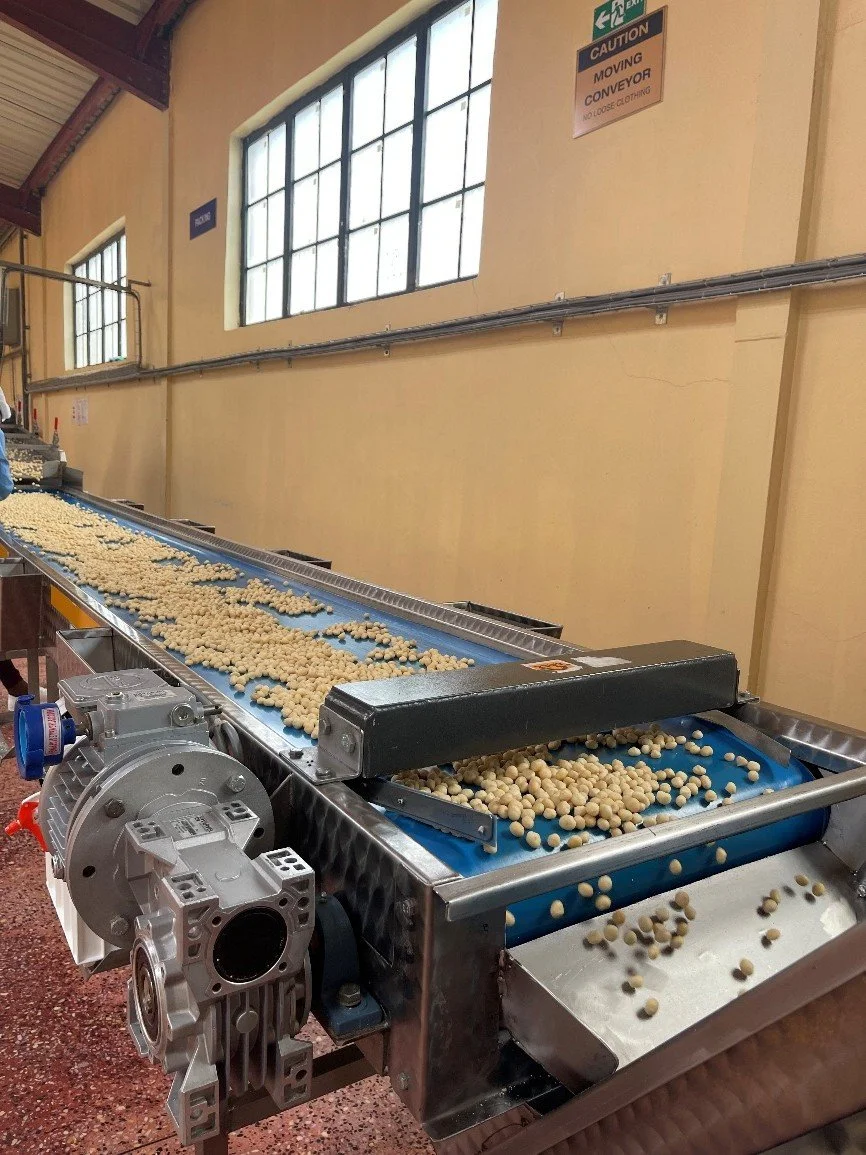
Figure 3: Macadamia nuts being processed at Tropical Mac's facility.
One of the strongest examples of this momentum comes from Biofarms, a Kenyan agribusiness specialising in sustainably grown avocados. After the programme ended, Biofarms mobilised a significant $2.4 million through a partnership with Eurofresh —a European organic avocado buyer. “The market linkage through Regeneration was a milestone,” explains Joseph Munuve, Commercial Lead at Biofarms. “Eurofresh are now our second largest customer. This was a significant breakthrough resulting from Regeneration’s support.” By strengthening partnerships with mission‑aligned buyers like Eurofresh, Biofarms has not only gained greater commercial stability but also clear incentives to expand organic, regenerative production and bring more land under sustainable management.
Tropical Mac offers another example of progress, having mobilised an additional $1.1 million through a new partnership with an American nut manufacturer. “Through Regeneration, we were able to increase our share of the US market and have since maintained contracts with customers” explains Pally Muchiri, Founder of Tropical Mac. In cases like these, partnerships formed during the programme have helped businesses move from survival mode to growth mode—strengthening continuity and helping to sustain sustainable farming practices.
Macadamia and Avocado Emerge as the Top Performing Value Chains
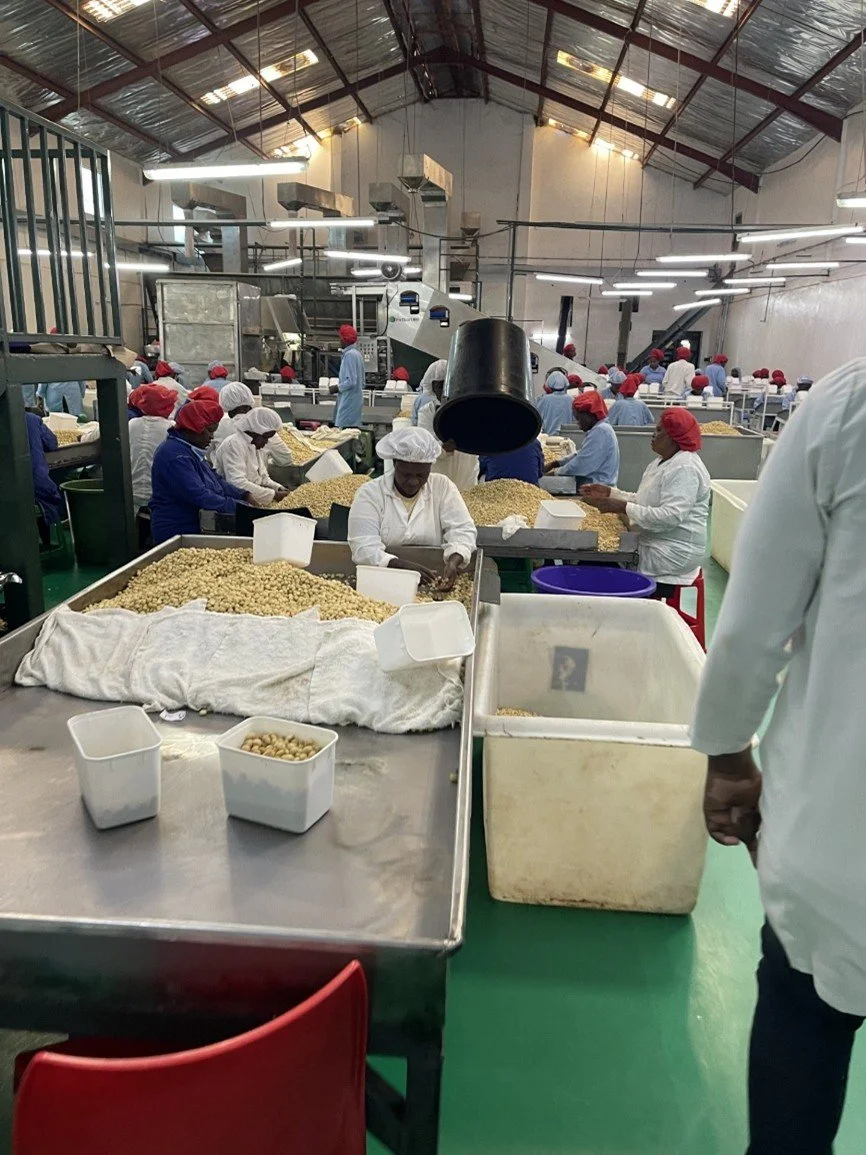
Figure 4: Image showing employees at Privamnuts' facility sorting macadamia nuts into different grades.
As the above deals show, some value chains have accelerated rapidly in the last year. Macadamia and avocado drew by far the most buyer interest and private finance in East Africa—around 75% and 20% respectively during the programme, and nearly 90% combined six months later. These commodities are emerging as strong anchors for restoration, showing how commercially attractive crops can create scalable pathways for sustainable land management. At the same time, other crops have started to advance, with coffee mobilising more than $200k and gum arabic over $300k —signalling emerging opportunities beyond the headline commodities.
One example of a strong macadamia success story is Privamnuts, a leading processor and exporter of sustainably certified macadamia in Kenya. “Since August we have doubled our macadamia processing capacity and are now in the process of setting up a separate avocado packhouse,” explains Evan Kaboi, Chief Financial Officer at Privamnuts. “Regeneration helped us secure more European presence and grow our organic macadamia segment with deals from (three leading buyers) in 2025."
Organic certification has been a major differentiator for Privamnuts, helping them stand out even as markets fluctuate. By leveraging their organic line and investing in value addition alongside, they have secured higher margins and a stronger pipeline of premium off‑takers. During the programme, they fulfilled $750k in deals and since then have secured a further ~$700k —illustrating how sustainable farming practices like organic farming provide entrepreneurs with a strong unique selling point and help them to navigate market volatility.
Structural Barriers Limiting Deal Flow
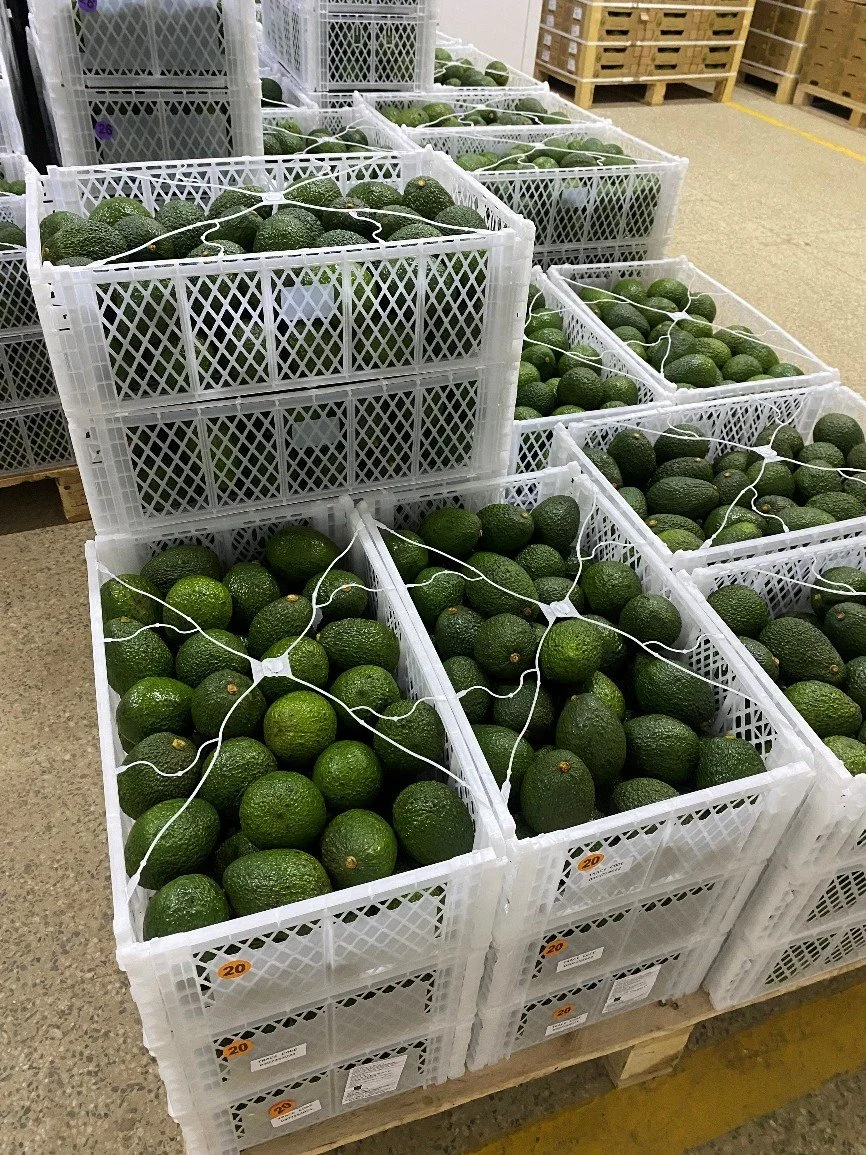
Figure 5: Avocados being sorted and packed into containers for transport at Biofarms' packhouse facility.
However, not every story is one of smooth success. Conversations with entrepreneurs reveal that, alongside promising deals, there are cases where finance has not delivered expected results —and where deep structural barriers continue to constrain smallholders and regenerative enterprises.
These challenges have been most pronounced in the Rusizi Basin and Lake Kivu region, spanning Rwanda, Burundi, and the DRC. During the programme, only 2% of mobilised finance originated from this region. Since then, some progress has been made —with grant funding secured for another enterprise— raising this landscape’s share to 4% of the total finance mobilised. But progress remains slow, and systemic barriers remain entrenched, with the region still grappling with political instability, climate‑related disruptions, and persistent gaps in investor readiness.
These pressures have driven investor risk appetite extremely low, with many only willing to deploy capital when an off‑take agreement is already in place. This creates a structural bind for entrepreneurs: they cannot access working capital without off-take, but cannot secure off‑take without working capital. KPI Investments—a specialty coffee company in Rwanda—illustrates this point. Regeneration supported them to arrange a $150k trade‑finance deal, but disbursement depended on KPI securing a buyer. Although Regeneration introduced them to a global coffee trader, negotiations collapsed when the offer fell below KPI’s minimum viable price. Without an off‑take agreement, the deal stalled, reinforcing the cycle that many remain trapped in.
Even in Kenya—where deal flow has been comparatively stronger—structural constraints persist. Recent US trade measures have created uncertainty, prompting some off‑takers to delay purchases while they wait for potential policy reversals. As Pally Muchiri, Founder of Tropical Mac, notes: “The 10% tariffs/customs imposed by the US on Kenyan products have affected our contracts, with some off‑takers holding back on additional purchases.” At the same time, instability around the Red Sea and the Suez Canal is disrupting major shipping routes and forcing cargo to reroute, driving high freight costs and unpredictable delivery schedules. As Joseph Munuve, Commercial Lead at Biofarms, explains: “The geopolitical situation in the (Red Sea) is affecting shipment logistics. Thankfully, this remains manageable and is not expected to affect the programme significantly”—in part because Biofarms can rely on air freight and advanced cold‑storage capacity—but whether other agri-SMEs can absorb these shocks as effectively is another question.
The Work Ahead: Success to Scale
The experience of these SMEs makes one thing clear: regenerative agribusinesses can unlock meaningful commercial value and deliver measurable impact when they have the right support. The deals catalysed during and after the programme show that premium buyers are willing to engage, that private finance can flow, and that sustainable, smallholder‑centred models can scale when barriers are removed.
But the work is far from finished. Systemic constraints—whether political, financial or environmental—continue to limit progress, particularly in regions like the Rusizi Basin and Lake Kivu region. While some businesses remain in structural traps, locked out of growth capital, others face external shocks that only the most resilient businesses can absorb.
The next phase of support must therefore go beyond individual transactions. It requires strengthening value-chains, deepening investor readiness, and building the enabling conditions that allow regenerative enterprises not just to survive but to scale. The opportunity is immense. With sustained investment, strategic partnerships, and continued technical assistance, regenerative agribusinesses can restore degraded landscapes at scale while helping to build a nature‑positive and commercially resilient agricultural sector across Africa.
This article is the first in a series, funded by Bezos Earth Fund. In the coming instalments, we’ll unpack further lessons from Regeneration and the solutions needed to unlock regenerative growth at scale.
[1] Sustainable production reflects WRI’s three restoration categories: forest restoration (tree planting, natural regeneration, and conservation), agroforestry and improved land management (trees on farms, better soil and water management, and practices that curb overgrazing, bushfires, and logging), and productivity gains on degraded land through climate‑smart agriculture that increase yields and reduce emissions.
[2] Agricultural Small and Medium-sized Enterprises (SMEs).
[3] Note that post‑programme projections are based on assumptions derived from the smallholders supported and hectares restored through private finance mobilised during Regeneration.